




Umbria is a region that contains some of the most recognizable landscapes in central Italy, with cultivated hills, stone villages, and cities that preserve a valuable historical heritage.
Among these, Assisi holds a special place. Perched on the slopes of Mount Subasio and overlooking the Umbrian valley, this city attracts visitors from all over the world every year.
In this guide, you will discover which places are worth a stop during a visit, along with some suggestions on what to see in the surrounding area.
Why visit Assisi?
Assisi is one of the most important places in European spiritual tradition. Saint Francis, a central figure in medieval religious history, was born here, and today the city still preserves the places linked to his life and the spread of Franciscanism.
In addition to its religious value, Assisi possesses an artistic heritage of great importance. The historic center preserves medieval buildings, churches decorated with pictorial cycles by masters like Giotto and Cimabue, squares that maintain the Roman urban structure, and views that open onto the valley below.
Since 2000, the entire historic complex of the city has been part of the UNESCO heritage list, a recognition that emphasizes the cultural value of the site.
Its position on Mount Subasio also offers nature trails and expansive views of the Umbrian countryside. This balance between art, spirituality, and landscape makes Assisi an essential stop for anyone visiting Umbria.

16 things to do and see in Assisi
The historic center of Assisi develops along a main road that climbs from the lower part of the city towards the Rocca Maggiore. Along this route, many of the most important places to visit are concentrated, including basilicas, historic squares, and museums.
Alongside the religious monuments linked to the figure of Saint Francis, the city also preserves traces of the Roman era and numerous medieval civil buildings. Here are the places that deserve a visit during a stay in Assisi.
1. Basilica di San Francesco d’Assisi (Basilica of Saint Francis of Assisi)
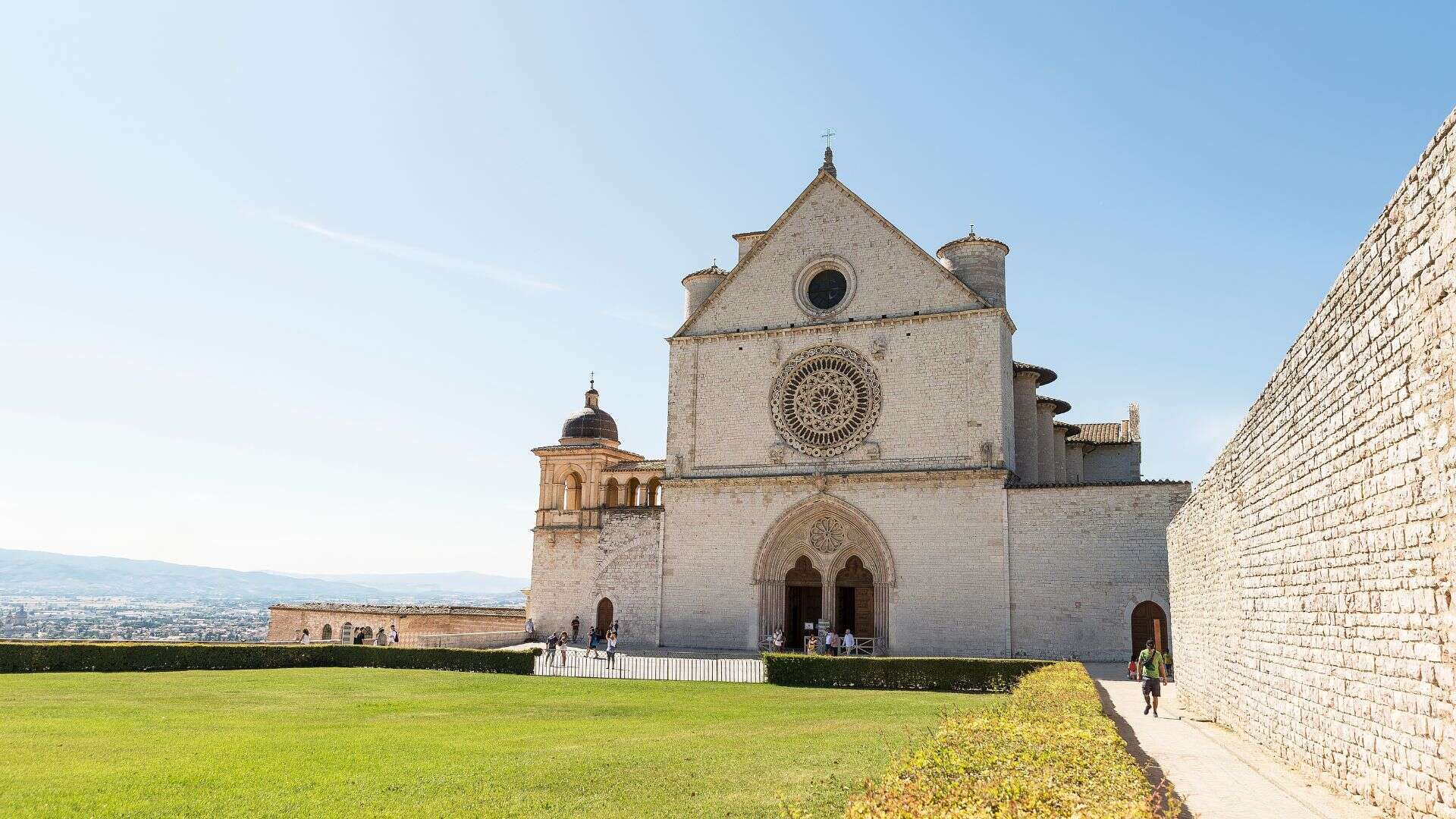
The Basilica di San Francesco is the most important monument in the city and one of the most visited religious complexes in Italy. It is located in the western part of the historic center and dominates the valley below thanks to its position on a large panoramic terrace.
The complex consists of two superimposed churches. The Lower Basilica, built in the 13th century, has an intimate atmosphere with frescoed chapels by artists such as Cimabue, Pietro Lorenzetti, and Simone Martini. Here you will also find the crypt that houses the tomb of Saint Francis.
Going up to the upper level, you enter the Upper Basilica, characterized by a bright interior with large Gothic vaults. The walls are decorated with the famous pictorial cycle that tells the life of Saint Francis, attributed to the workshop of Giotto. This cycle of frescoes is one of the absolute masterpieces of medieval painting.
The entire complex is a UNESCO World Heritage site.
| TICKET PRICE | Free |
| HOW TO BOOK | Free access |
| HOW TO GET THERE FROM THE CENTER | Discover the route |
2. Basilica di Santa Chiara (Basilica of Saint Clare)
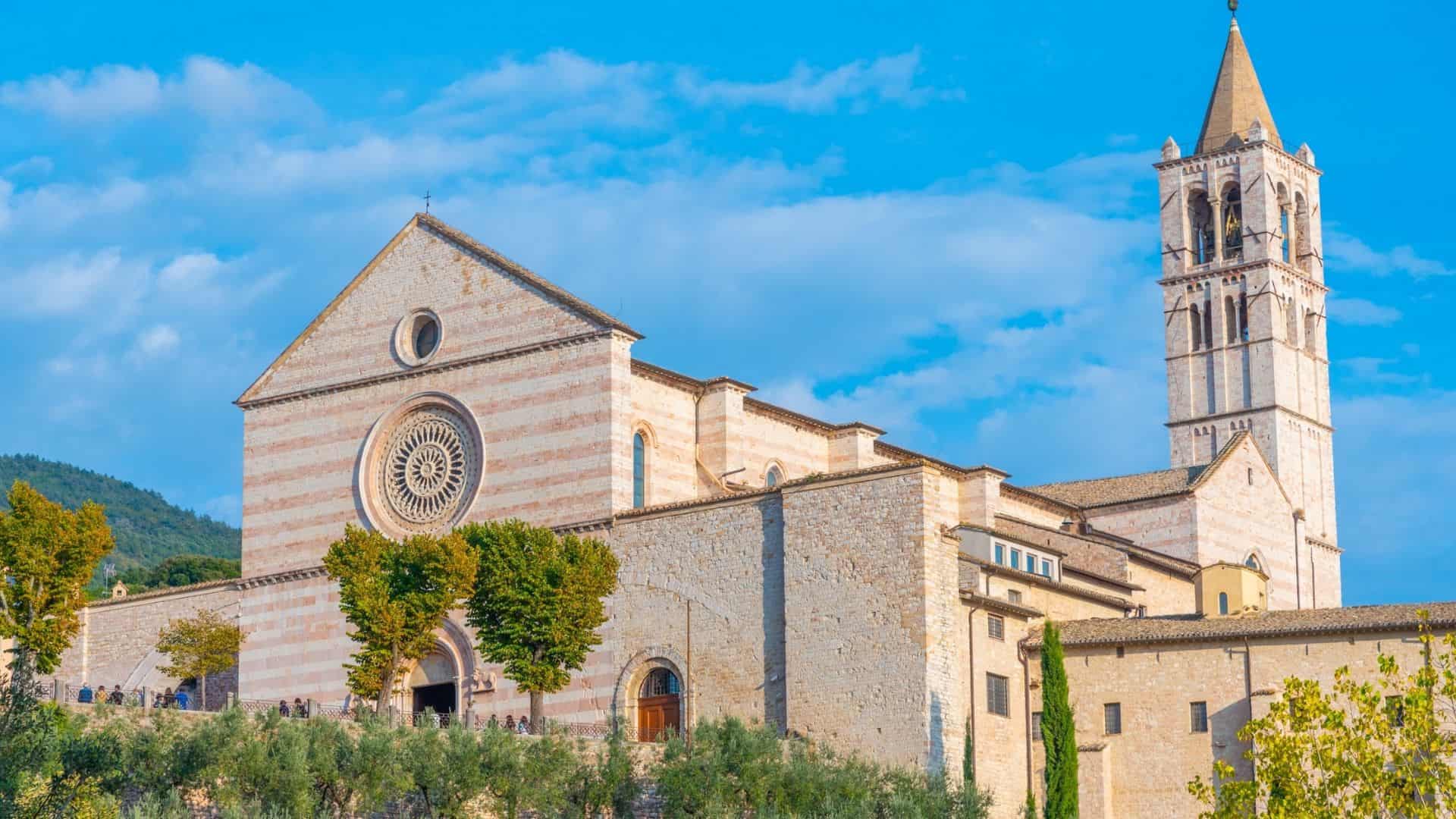
The Basilica di Santa Chiara is located in the eastern part of the historic center, in a panoramic position overlooking the valley. The building was constructed in the 13th century to house the remains of Clare of Assisi, founder of the Order of Poor Clares and a central figure in Franciscan spirituality.
The facade is made of the typical pink and white stone from Mount Subasio and features a large central rose window. The interior has a simple structure, with a single nave leading to the main altar.
In the crypt of the basilica, the body of Saint Clare is located, kept in an urn visible to visitors. Inside the church is also preserved the San Damiano Cross, the image before which, according to tradition, Saint Francis received the call to rebuild the Church.
From the square in front of the basilica, one of the most expansive views of the Umbrian countryside opens up, with the view reaching as far as Perugia on clearer days.
| TICKET PRICE | Free |
| HOW TO BOOK | Free access |
| HOW TO GET THERE FROM THE CENTER | Discover the route |
3. Basilica di Santa Maria degli Angeli (Basilica of Saint Mary of the Angels)
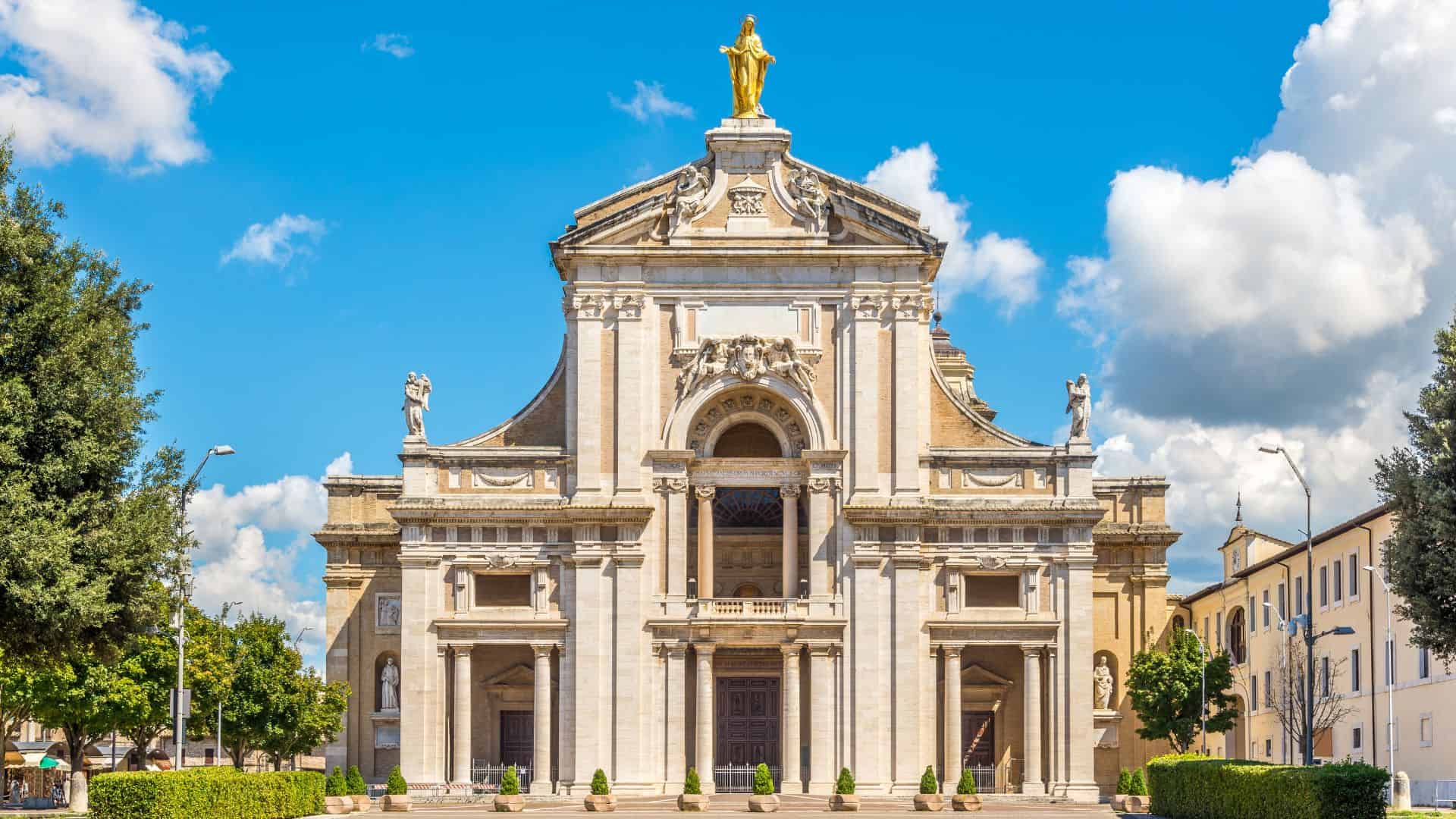
The Basilica di Santa Maria degli Angeli is located at the foot of Assisi. It was built between the 16th and 17th centuries to protect the Porziuncola, the small chapel where Saint Francis founded the Order of Friars Minor and where he died in 1226.
Upon entering the basilica, one is immediately struck by the monumental dimensions of the building, which contrast with the simplicity of the Porziuncola housed within it.
Inside the basilica, there are also other significant places, such as the Chapel of the Transito, where Saint Francis spent his last hours, and the Rose Garden without thorns, linked to a miraculous tradition of the saint.
| TICKET PRICE | Guided tour: €10.00 Porziuncola Museum: €4.00 |
| HOW TO BOOK | +39 339 3390103 |
| HOW TO GET THERE FROM THE CENTER | Discover the route |
4. Eremo delle Carceri (Hermitage of the Prisons)
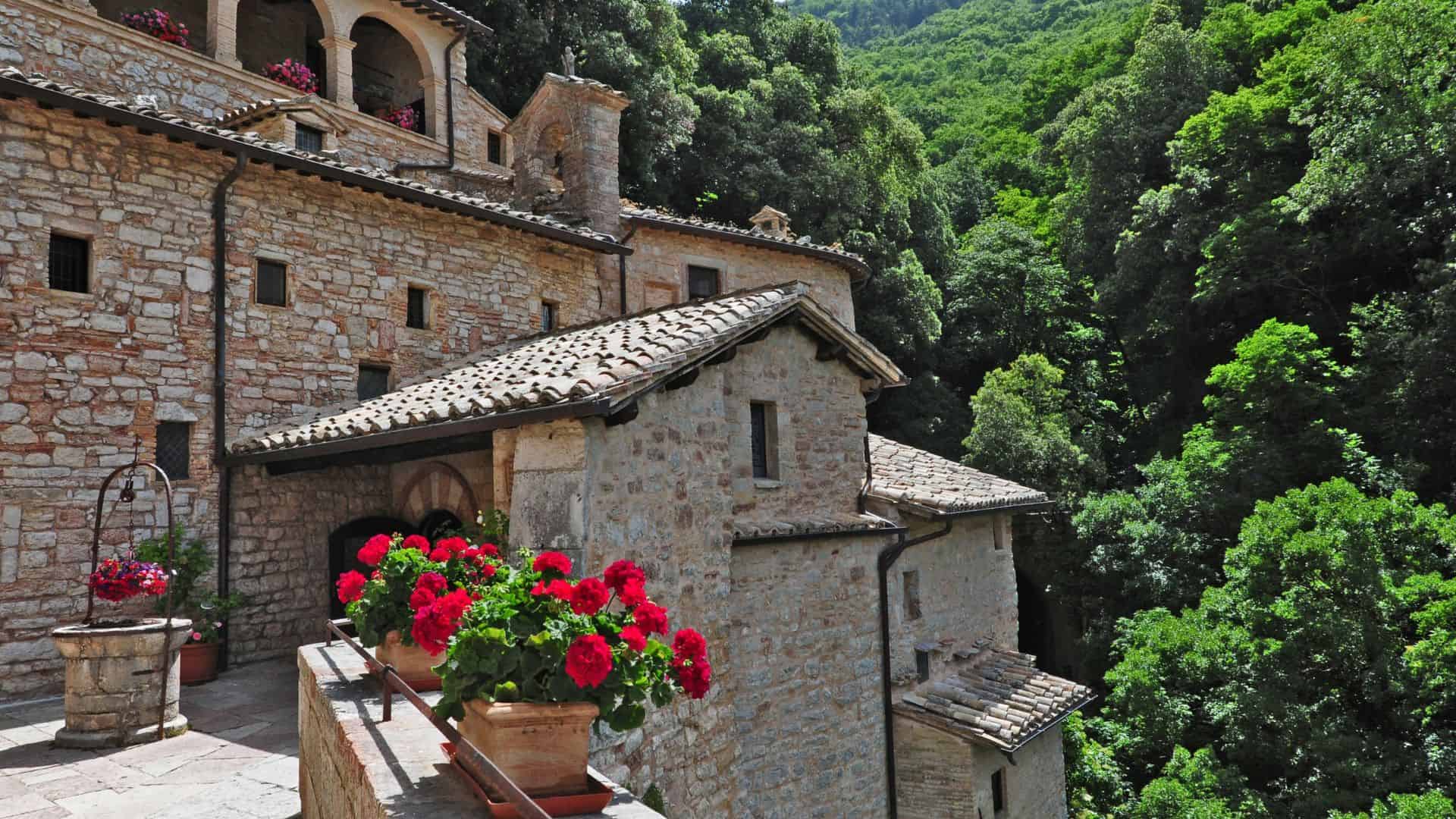
Immersed in the silence of the woods of Mount Subasio, the Eremo delle Carceri is one of the most evocative and spiritual places around Assisi. Here, Saint Francis often retreated with his companions to pray and experience moments of contemplation away from city life.
The complex is made up of small stone buildings built around natural caves, which were used as meditation cells. Walking along the paths of the forest, you can still feel an atmosphere of peace today, which makes the place particularly fascinating.
One of the most interesting elements is the so-called “stone bed” of Saint Francis, a natural cavity in the rock where the saint used to rest.
| TICKET PRICE | Free |
| HOW TO BOOK | Free access |
| HOW TO GET THERE FROM THE CENTER | Discover the route |
5. Chiesa di San Damiano (Church of San Damiano)
The Chiesa di San Damiano is one of the symbolic places of Saint Francis’s life. According to tradition, it was right here that the saint received the famous message from the crucifix: “Francis, go and repair my house,” which marked the beginning of his spiritual mission.
The church, located just outside the walls of Assisi, is surrounded by olive groves and hills that make the visit particularly evocative.
| TICKET PRICE | Free |
| HOW TO BOOK | Free access |
| HOW TO GET THERE FROM THE CENTER | Discover the route |
6. Piazza del Comune (Town Square)
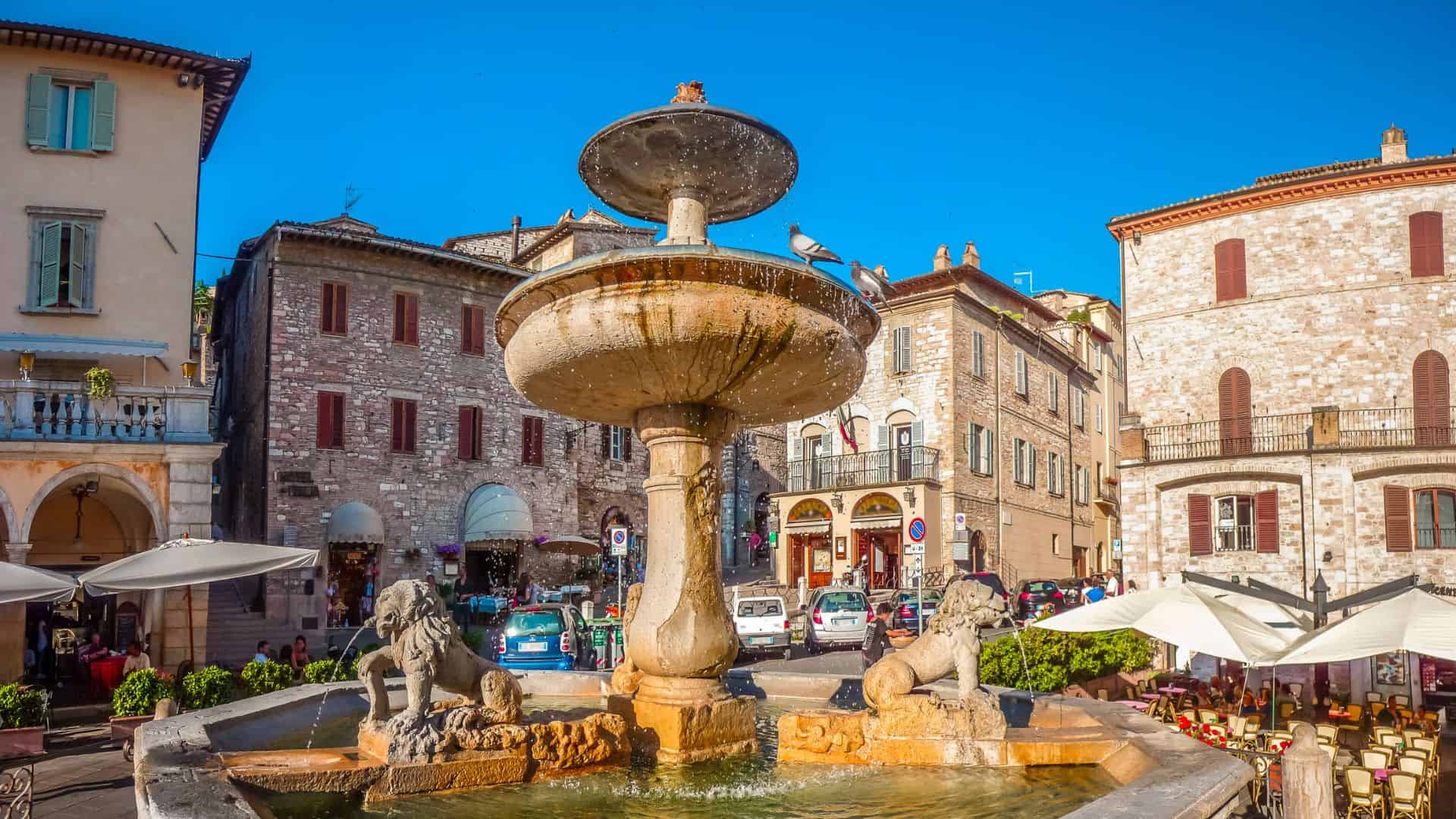
In the heart of Assisi’s historic center lies Piazza del Comune, one of the liveliest places for tourists and residents. Surrounded by historic buildings, the square has been the center of the city’s civil and commercial life for centuries.
Some of Assisi’s most important buildings face onto it, such as the Palazzo dei Priori and the Palazzo del Capitano del Popolo; the cafes and restaurants also make it a perfect place to take a break during your visit.
The square is also an excellent starting point for exploring the streets of the historic center, full of artisan shops, stores selling typical products, and panoramic views of the Umbrian valley.
| TICKET PRICE | Free |
| HOW TO BOOK | Free access |
| HOW TO GET THERE FROM THE CENTER | Discover the route |
7. Tempio di Minerva (Temple of Minerva)
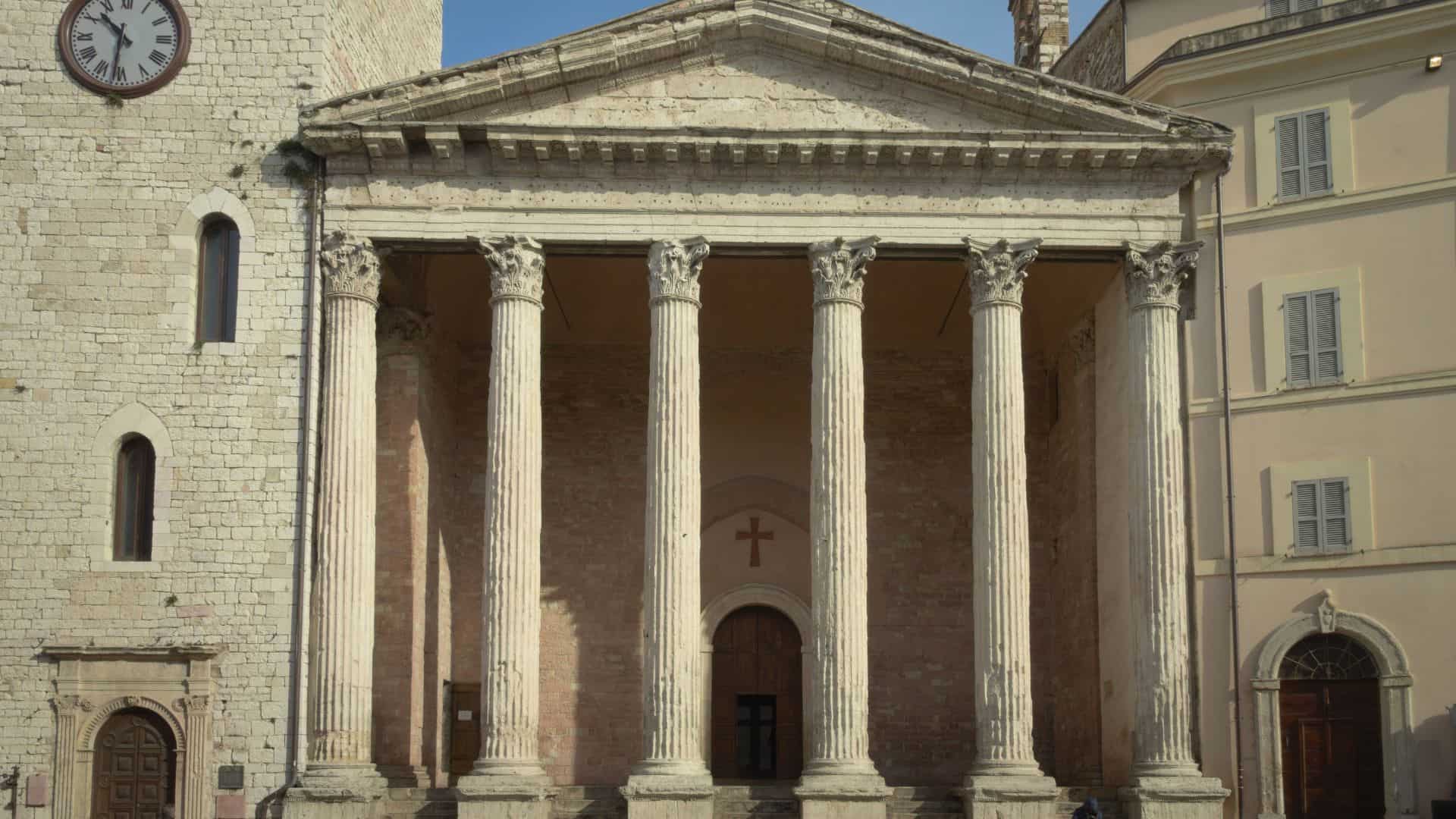
Overlooking Piazza del Comune, the Tempio di Minerva is one of Assisi’s most surprising monuments. It is a Roman temple dating back to the 1st century BC, perfectly preserved in its facade with Corinthian columns.
Over the centuries, the building has been transformed into a Christian church, now known as the Chiesa di Santa Maria sopra Minerva. This architectural adaptation makes the monument particularly interesting, as it combines elements of Roman architecture with internal Baroque decorations.
| TICKET PRICE | Free |
| HOW TO BOOK | Free access |
| HOW TO GET THERE FROM THE CENTER | Discover the route |
8. Foro Romano di Assisi (Roman Forum of Assisi)
The Foro Romano di Assisi is one of the most important testimonies of the ancient Roman city on which medieval Assisi developed. Located beneath the current Piazza del Comune, this archaeological complex allows you to discover what the city’s political and commercial center looked like over two thousand years ago.
During the visit, it is possible to observe several perfectly preserved areas, including the remains of columns, original pavements, and ancient public buildings. Among the most interesting structures are the temple, the tribunal, some cisterns, and an evocative cryptoporticus, an underground corridor used to connect different spaces of the forum.
Today, the site is part of the Archaeological Museum of Assisi.
| TICKET PRICE | Full price ticket: €5.00 Reduced ticket: €3.00, for university students with ID, schools, children aged 9 to 18, seniors over 65, groups of over 20 people Free: schools and residents of the municipality of Assisi, children up to 8 years old, holders of a disability card, ICOM members |
| HOW TO BOOK | Free access |
| HOW TO GET THERE FROM THE CENTER | Discover the route |
9. Palazzo del Capitano del Popolo (Palace of the Captain of the People), Palazzo dei Priori (Palace of the Priors) and Torre del Popolo (Tower of the People)
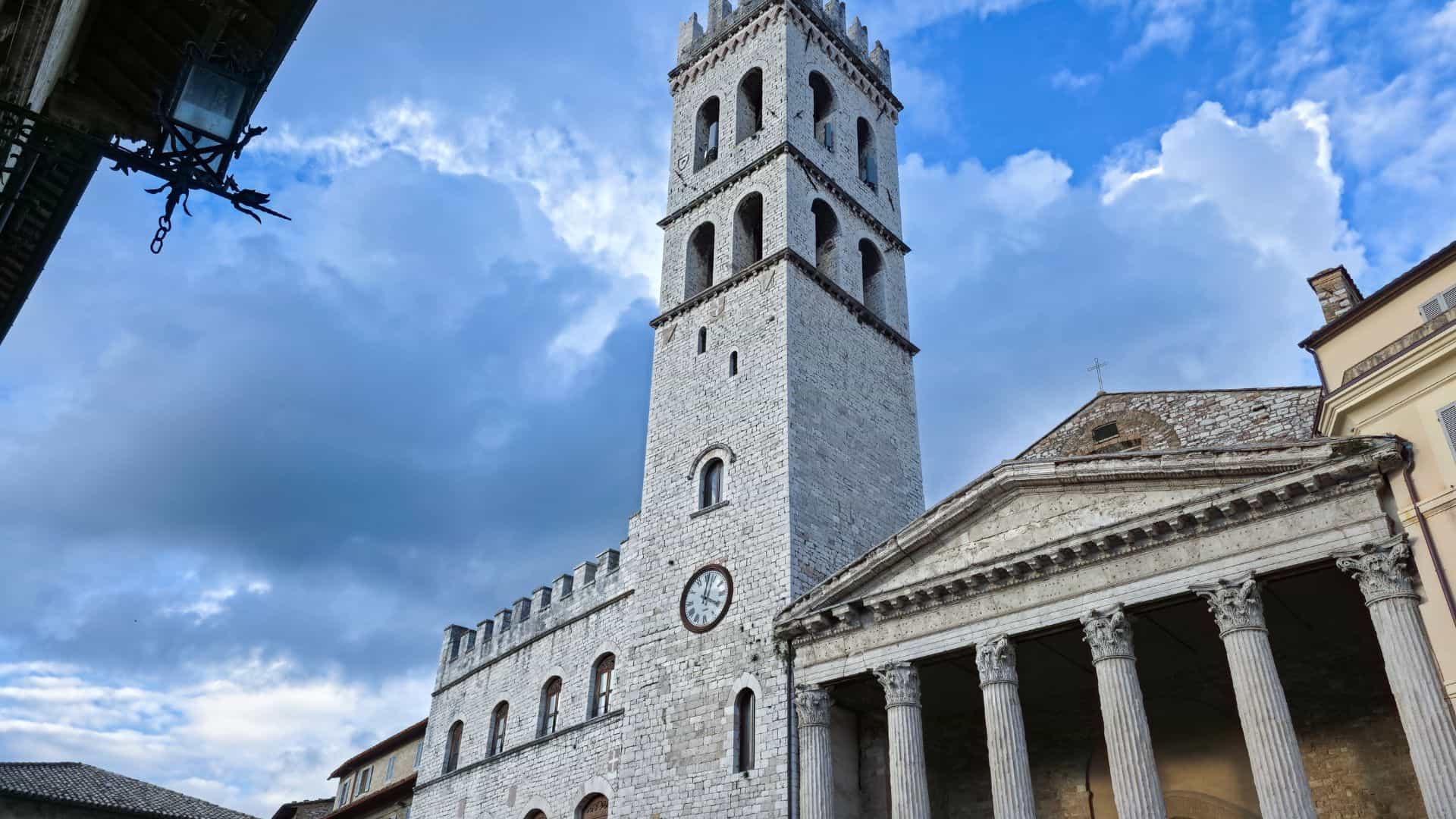
Overlooking Piazza del Comune, the Palazzo del Capitano del Popolo, the Palazzo dei Priori, and the Torre del Popolo form one of the most representative medieval architectural complexes in Assisi.
The Palazzo del Capitano del Popolo, built in the 13th century, was the seat of the political figure charged with representing the people and balancing the power of the nobility. Next to it is the Palazzo dei Priori, the seat of the city administration, characterized by an elegant facade and large Gothic windows.
Completing the complex is the Torre del Popolo, which dominates the square and represented a symbol of communal autonomy.
| TICKET PRICE | Free |
| HOW TO BOOK | Free access |
| HOW TO GET THERE FROM THE CENTER | Discover the route |
10. Cattedrale di San Rufino (Cathedral of San Rufino)
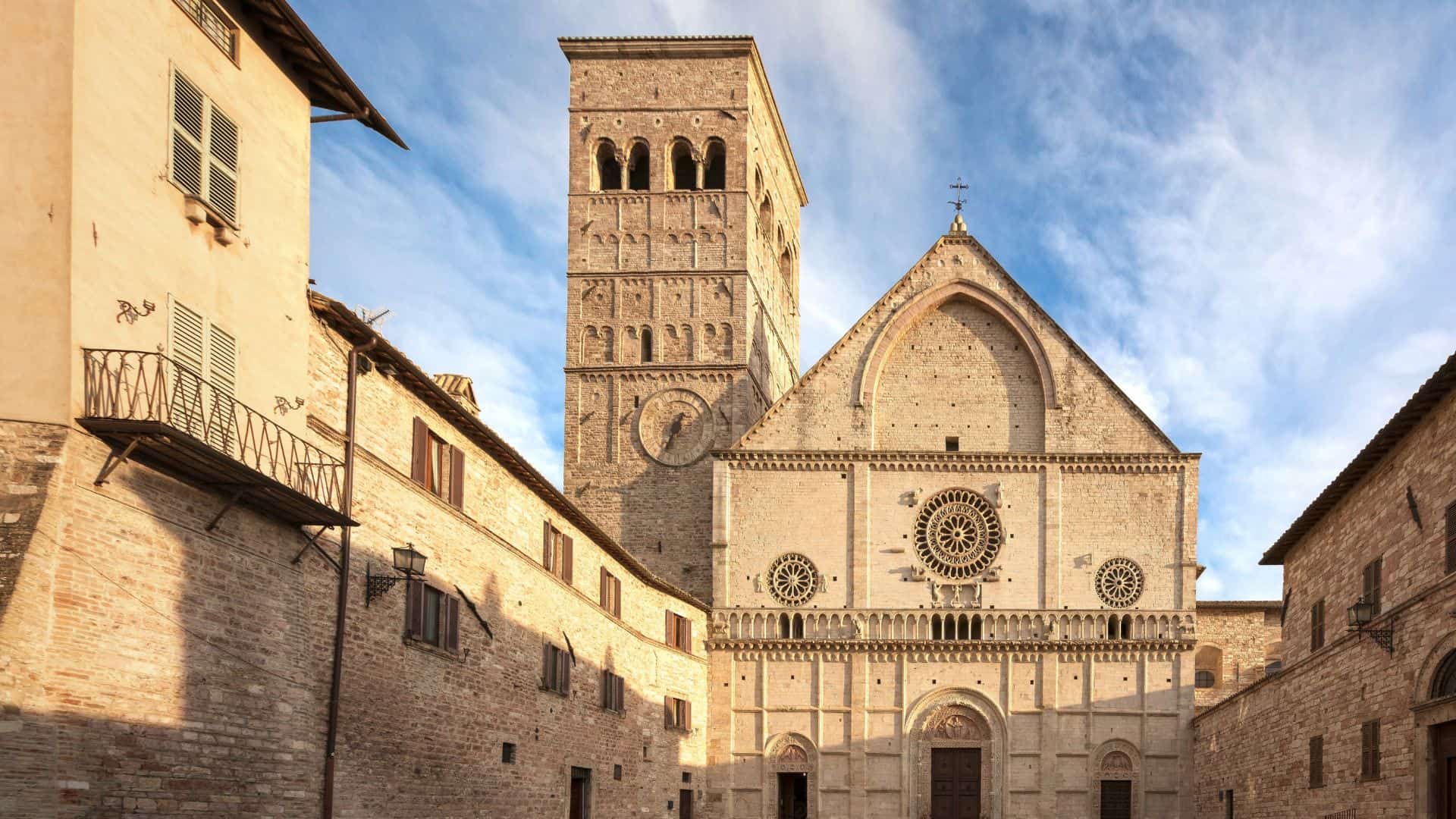
The Cattedrale di San Rufino is the main church of Assisi and one of the most important examples of Umbrian Romanesque architecture. Built in the 12th century, the cathedral is dedicated to San Rufino, the bishop who, according to tradition, evangelized the city.
The white stone facade is one of the most fascinating elements of the building: decorated with rose windows, bas-reliefs, and symbolic motifs, it is a true masterpiece of local medieval art. The interior, more sober than the facade, preserves several works of art and chapels of great historical value.
| TICKET PRICE | Free |
| HOW TO BOOK | Free access |
| HOW TO GET THERE FROM THE CENTER | Discover the route |
11. Chiesa Nuova (New Church)
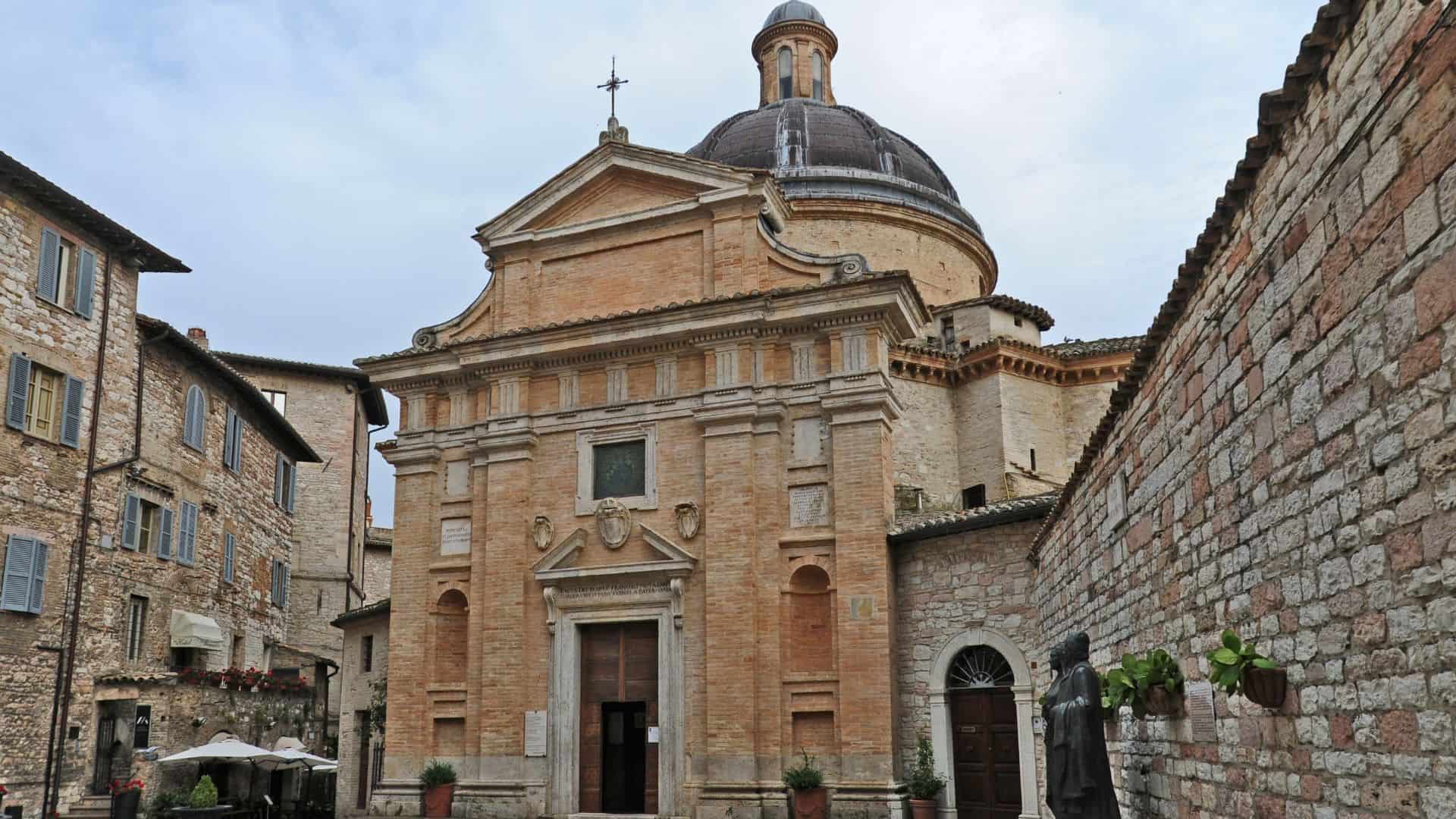
The Chiesa Nuova is built on the site where the birthplace of Saint Francis of Assisi stood. Constructed in the 17th century at the behest of King Philip III of Spain, the church was designed to commemorate the saint’s childhood and the family environment in which he grew up.
Inside the building, some rooms linked to the Franciscan tradition are preserved, including the alleged domestic prison where Francis’s father locked him up after his decision to abandon a life of comfort to follow a spiritual vocation.
The church has a sober architectural style and is centrally located in the historic center.
| TICKET PRICE | Free |
| HOW TO BOOK | Free access |
| HOW TO GET THERE FROM THE CENTER | Discover the route |
12. Palazzo Vallemani and Pinacoteca Comunale (Municipal Art Gallery)
Palazzo Vallemani is one of the most elegant Baroque buildings in Assisi and houses the Pinacoteca Comunale, an important museum dedicated to Umbrian painting. Built in the 17th century, the palace is striking for its rooms decorated with refined frescoes and stuccos.
Inside the art gallery, works that narrate the artistic evolution of the city and the surrounding territory are preserved. Among the paintings on display are works by Umbrian and Tuscan artists active between the Middle Ages and the Renaissance.
| TICKET PRICE | Full price ticket: €3.00 Reduced ticket: €2.00, for university students with ID, schools, children aged 9 to 18, seniors over 65, groups of over 20 people Free: schools and residents of the municipality of Assisi, children up to 8 years old, holders of a disability card, ICOM members |
| HOW TO BOOK | Free access |
| HOW TO GET THERE FROM THE CENTER | Discover the route |
13. Rocca Maggiore (Major Fortress)
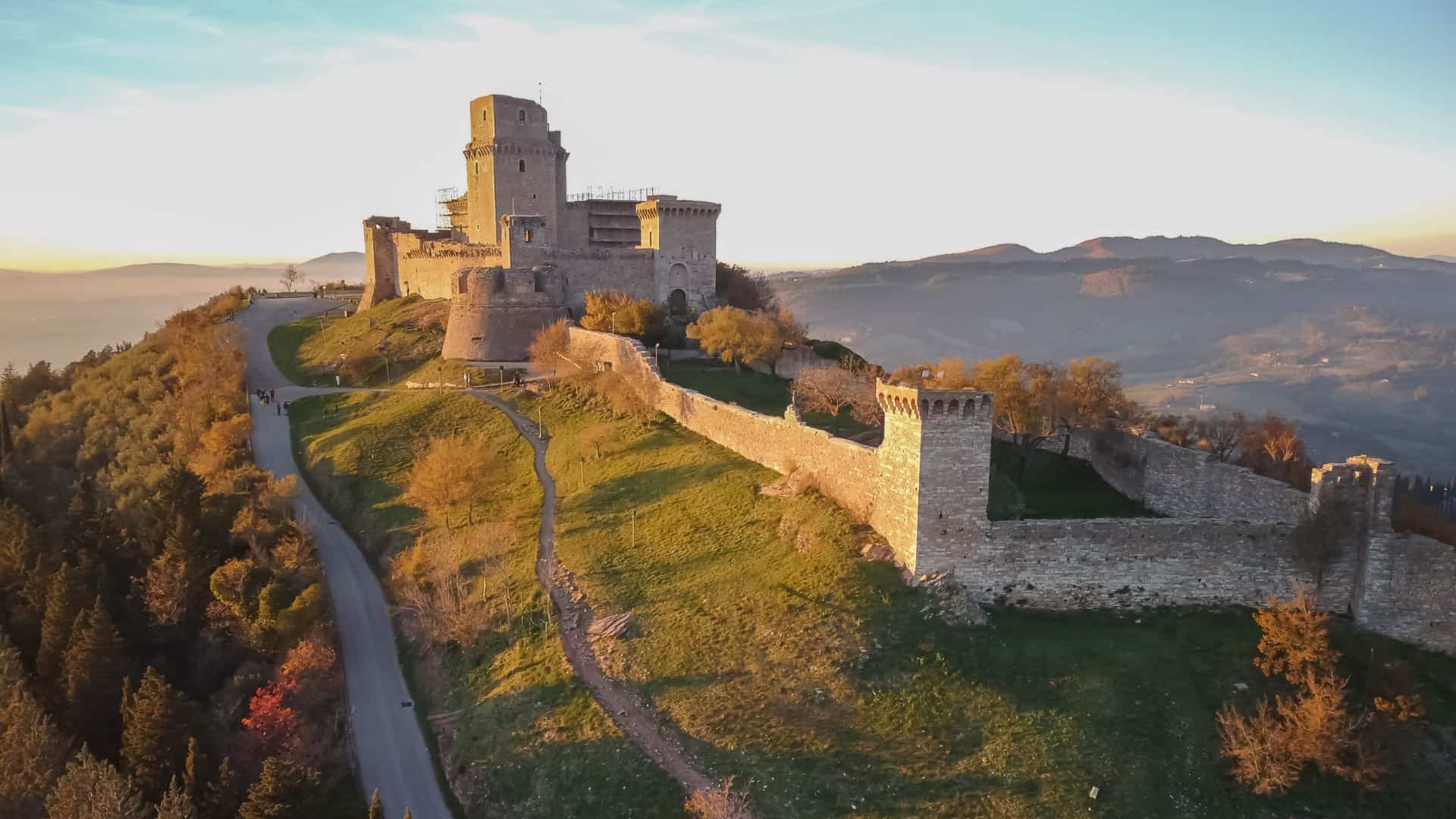
The Rocca Maggiore dominates Assisi from the top of the hill overlooking the city and is one of the most spectacular medieval fortifications in Umbria. The current structure dates mainly from the 14th century when it was rebuilt to strengthen military control over the territory.
The castle consists of a large central tower and a series of walls and bastions that follow the profile of the hill. By climbing up to the fortress, you can enjoy an extraordinary panoramic view of the city, the Umbrian valley, and Mount Subasio.
In addition to the view, the visit allows you to explore courtyards, walkways, and towers that tell the defensive history of Assisi.
| TICKET PRICE | Full price ticket: €6.00 Reduced ticket: €4.00, for university students with ID, schools, children aged 9 to 18, seniors over 65, groups of over 20 people Free: schools and residents of the municipality of Assisi, children up to 8 years old, holders of a disability card, ICOM members |
| HOW TO BOOK | Free access |
| HOW TO GET THERE FROM THE CENTER | Discover the route |
14. Walk along the medieval walls
One of the most pleasant experiences in Assisi is the walk along the medieval walls, which surround a large part of the historic center.
Today, the path along the walls allows you to discover very suggestive panoramic views of the Umbrian countryside and the valley below. Walking along the ramparts, you will encounter ancient city gates and defensive towers.
| TICKET PRICE | Free |
| HOW TO BOOK | Free access |
| HOW TO GET THERE FROM THE CENTER | Discover the route |
15. Walk in the Bosco di San Francesco (Saint Francis’ Woods)
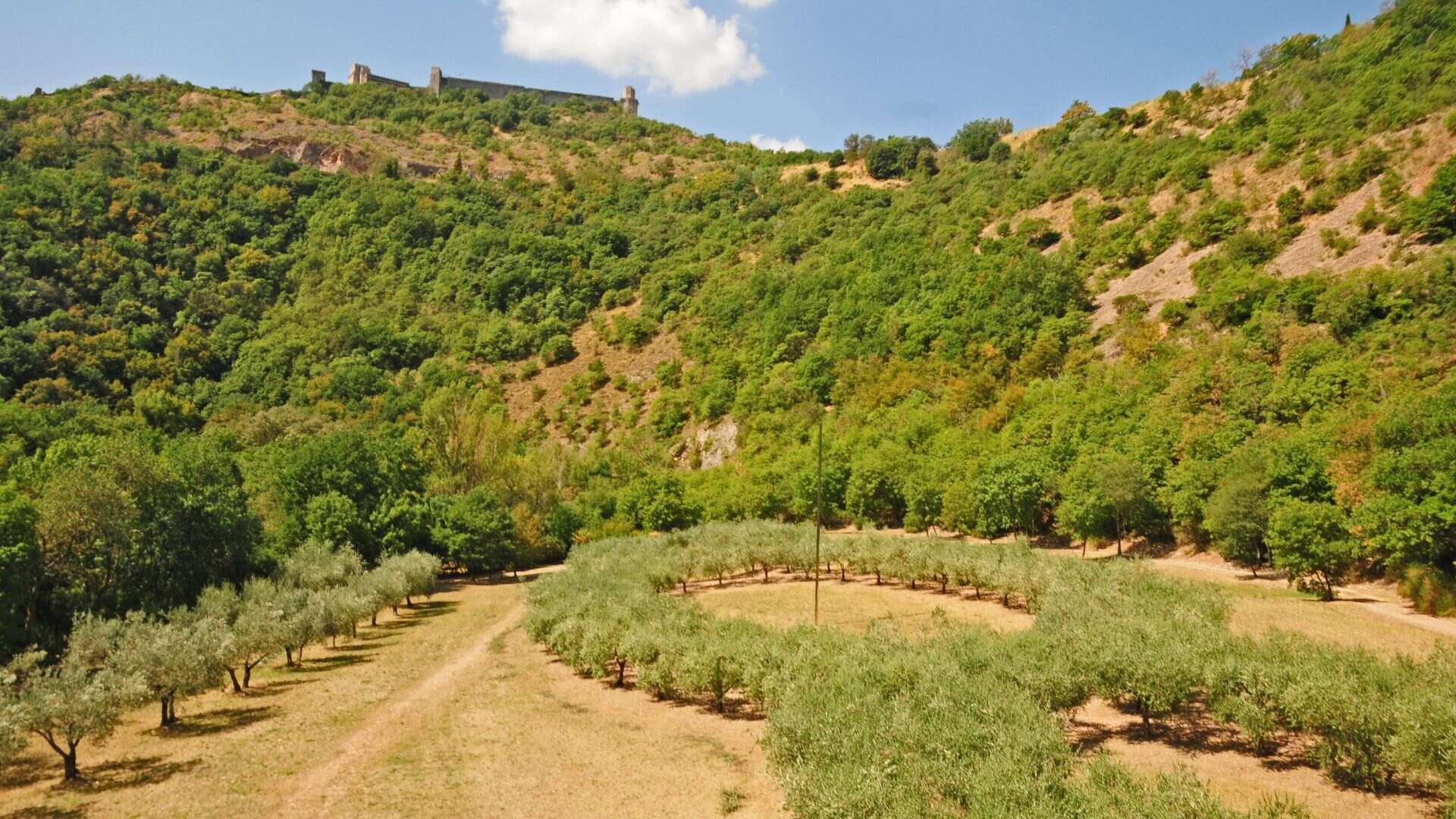
At the foot of the Basilica of Saint Francis lies one of the most evocative places in the area, the Bosco di San Francesco, a natural area of over sixty hectares managed by FAI (The National Trust for Italy).
The path starts near the basilica and slowly descends towards the valley through trails, cultivated fields, olive groves, and small watercourses. During the walk, you will encounter charming places such as the ancient Benedictine mill, the medieval tower, and some rural farmhouses that tell the story of the agricultural life of this territory.
One of the most iconic points of the woods is the land art work called Terzo Paradiso (Third Paradise), created by the artist Michelangelo Pistoletto with stones arranged to form a large symbol visible from above.
| TICKET PRICE | Free |
| HOW TO BOOK | Free access |
| HOW TO GET THERE FROM THE CENTER | Discover the route |
16. Franciscan Itinerary
Assisi is the heart of the Franciscan Way, a spiritual itinerary that retraces the most significant places in the life of Saint Francis.
Even without undertaking the entire journey, it is possible to follow a small route within the city and its surroundings to discover the places linked to his history.
Among the main stops are the Basilica di San Francesco, where his tomb is kept, the Chiesa Nuova, built on the saint’s birthplace, and the Chiesa di San Damiano.
Just outside the center are also the Eremo delle Carceri, nestled in the woods of Mount Subasio, and the Porziuncola, housed inside the Basilica di Santa Maria degli Angeli.
What to eat in Assisi?
The cuisine of Assisi fully reflects the Umbrian gastronomic tradition, made of simple ingredients and intense flavors. In the restaurants of the historic center, it is easy to find dishes linked to the region’s rural culture, prepared with local products and recipes passed down through generations.
Among the most well-known specialties are strangozzi, a long pasta often served with meat sauces or with black truffle, one of the most representative products of the territory. Also very common is the torta al testo, a flatbread cooked on a stone griddle and filled with cured meats, local cheeses, or vegetables.
Those who love main courses can try the Umbrian porchetta, flavored with herbs and spices, or dishes based on wild boar, which are very common in regional cuisine. The meal often ends with traditional desserts like rocciata, a dessert similar to strudel prepared with dried fruit, apples, and spices.
Cities and villages to visit near Assisi
Assisi is an excellent starting point for exploring many of Umbria’s most fascinating locations (if you want to learn more, we leave you this specific guide on what to see in Umbria, with various ideas and suggestions).
The Monti Sibillini area offers one of the most spectacular mountain landscapes in central Italy. Here you will find plateaus, small villages, and numerous trails that cross the Monti Sibillini National Park, an ideal territory for those who love nature and hiking (if you want to discover the Monti Sibillini, what to see and what activities to do, we suggest this article).
About a half-hour drive from Assisi is Perugia, the capital of Umbria. Its historic center is rich in important monuments such as the Palazzo dei Priori, the Fontana Maggiore, and the Cattedrale di San Lorenzo.
Among the most charming villages in the area is Spello, famous for its streets decorated with flowers and for its beautiful light stone facades. Walking through its historic center means discovering picturesque views and perfectly preserved Renaissance palaces.
Another much-loved destination is Gubbio, one of the best-preserved medieval villages in Italy. Its stone houses, monumental squares, and the Palazzo dei Consoli create a unique atmosphere that seems suspended in time.
For those who prefer lake landscapes, Lake Trasimeno is a perfect destination for a day trip. Its shores host small towns, typical restaurants, and ports from which ferries depart for the lake’s islands (for a guide to the most beautiful lakes in Italy, take a look at this article).
Final tips for visiting Assisi
Visiting Assisi is simple if you plan your visit with a little advance notice. The historic center is largely pedestrianized, so it is advisable to leave your car in the parking lots located outside the walls, which are connected to the center by escalators and pedestrian paths.
The best time to visit the city is from spring to early autumn, when the days allow for a leisurely stroll through the medieval streets. Days in mid-autumn are also highly appreciated, especially for the colors that blanket the Umbrian countryside.
Assisi can be visited in a day, but dedicating more time to the area allows you to discover many other interesting places in Umbria. Organizing an itinerary that includes villages, art cities, and natural landscapes makes the trip even more complete.
When exploring this region, having a comfortable base to stay helps you enjoy the holiday with more freedom. The villas at Anita Villas offer ample spaces, well-kept environments, and all the necessary comforts to relax after a day of sightseeing, including a private pool and panoramic views of the Umbrian countryside.
If you are planning your trip to Umbria, choose a villa that will make the experience even more special and book the solution that best suits your stay.